" height="298.02561838156134px" id="D9X2aSFXI" transform="translate(0 0)" width="175.30918725366723px"/><path d="M 2.805 36.064 L 14.926 36.064 C 14.926 45.781 18.833 54.496 25.245 60.907 C 31.656 67.319 40.371 71.226 50.088 71.226 C 59.805 71.226 68.521 67.319 74.932 60.907 C 81.343 54.496 85.25 45.781 85.25 36.064 L 97.372 36.064 C 97.372 62.21 76.234 83.347 50.088 83.347 C 23.942 83.347 2.805 62.21 2.805 36.064 Z M 76.234 3.306 L 104.985 3.306 L 104.985 15.127 L 76.234 15.127 Z M 17.631 8.816 C 17.631 13.724 13.724 17.631 8.816 17.631 C 3.907 17.631 0 13.724 0 8.816 C 0 3.907 3.907 0 8.816 0 C 13.724 0 17.631 3.907 17.631 8.816 Z" fill="rgb(0, 174, 239)" height="83.34699467365817px" id="Y176GXhIj" transform="translate(37.566 150.766)" width="104.98515800772623px"/><path d="M 68.32 42.575 C 63.913 42.575 60.006 41.673 56.6 39.77 C 53.194 37.967 50.489 35.362 48.486 32.157 C 46.482 28.951 45.48 25.345 45.48 21.237 C 45.48 17.13 46.482 13.424 48.486 10.218 C 50.489 7.012 53.194 4.508 56.6 2.705 C 60.006 0.902 63.913 0 68.32 0 C 72.728 0 76.535 0.902 80.041 2.705 C 83.447 4.508 86.152 7.012 88.155 10.218 C 90.059 13.424 91.061 17.13 91.061 21.237 C 91.061 25.345 90.059 28.951 88.155 32.157 C 86.252 35.362 83.547 37.867 80.041 39.77 C 76.635 41.573 72.728 42.575 68.32 42.575 Z M 68.32 32.758 C 70.324 32.758 72.127 32.257 73.73 31.355 C 75.333 30.454 76.535 29.151 77.537 27.348 C 78.438 25.645 78.939 23.642 78.939 21.237 C 78.939 18.833 78.438 16.83 77.537 15.127 C 76.635 13.424 75.333 12.121 73.73 11.22 C 72.127 10.318 70.324 9.817 68.32 9.817 C 66.317 9.817 64.514 10.318 62.911 11.22 C 61.308 12.121 60.006 13.424 59.104 15.127 C 58.203 16.83 57.702 18.833 57.702 21.237 C 57.702 23.642 58.203 25.645 59.104 27.348 C 60.006 29.051 61.308 30.354 62.911 31.355 C 64.514 32.257 66.317 32.758 68.32 32.758 Z M 0.401 169.499 L 0.401 115.704 L 24.844 115.704 C 30.654 115.704 35.863 116.806 40.271 119.01 C 44.679 121.214 48.185 124.319 50.689 128.326 C 53.194 132.333 54.496 137.042 54.496 142.551 C 54.496 148.061 53.194 152.669 50.689 156.777 C 48.185 160.784 44.679 163.889 40.271 166.193 C 35.863 168.397 30.654 169.499 24.844 169.499 Z M 12.923 159.281 L 24.343 159.281 C 27.949 159.281 31.055 158.58 33.659 157.277 C 36.264 155.875 38.368 153.972 39.77 151.467 C 41.273 148.963 41.974 146.058 41.974 142.652 C 41.974 139.246 41.273 136.24 39.77 133.736 C 38.267 131.231 36.264 129.328 33.659 127.926 C 31.055 126.523 27.949 125.922 24.343 125.922 L 12.923 125.922 Z M 78.839 170.1 C 74.431 170.1 70.524 169.198 67.118 167.295 C 63.712 165.492 61.008 162.887 59.004 159.682 C 57.001 156.476 55.999 152.87 55.999 148.762 C 55.999 144.655 57.001 140.949 59.004 137.743 C 61.008 134.537 63.712 132.033 67.118 130.23 C 70.524 128.427 74.431 127.525 78.839 127.525 C 83.247 127.525 87.054 128.427 90.56 130.23 C 93.966 132.033 96.67 134.537 98.674 137.743 C 100.577 140.949 101.579 144.655 101.579 148.762 C 101.579 152.87 100.577 156.476 98.674 159.682 C 96.771 162.887 94.066 165.392 90.56 167.295 C 87.154 169.098 83.247 170.1 78.839 170.1 Z M 78.839 160.283 C 80.843 160.283 82.646 159.782 84.249 158.88 C 85.851 157.979 87.054 156.676 88.055 154.873 C 88.957 153.17 89.458 151.167 89.458 148.762 C 89.458 146.358 88.957 144.355 88.055 142.652 C 87.154 140.949 85.851 139.646 84.249 138.745 C 82.646 137.843 80.843 137.342 78.839 137.342 C 76.836 137.342 75.032 137.843 73.43 138.745 C 71.827 139.646 70.524 140.949 69.623 142.652 C 68.721 144.355 68.22 146.358 68.22 148.762 C 68.22 151.167 68.721 153.17 69.623 154.873 C 70.524 156.576 71.827 157.878 73.43 158.88 C 75.032 159.782 76.836 160.283 78.839 160.283 Z M 125.321 170.1 C 120.913 170.1 117.006 169.198 113.6 167.295 C 110.194 165.492 107.49 162.887 105.486 159.682 C 103.483 156.476 102.481 152.87 102.481 148.762 C 102.481 144.655 103.483 140.949 105.486 137.743 C 107.49 134.537 110.194 132.033 113.6 130.23 C 117.006 128.427 120.913 127.525 125.321 127.525 C 129.729 127.525 133.536 128.427 137.042 130.23 C 140.448 132.033 143.152 134.537 145.156 137.743 C 147.059 140.949 148.061 144.655 148.061 148.762 C 148.061 152.87 147.059 156.476 145.156 159.682 C 143.253 162.887 140.548 165.392 137.042 167.295 C 133.636 169.098 129.729 170.1 125.321 170.1 Z M 125.321 160.283 C 127.325 160.283 129.128 159.782 130.731 158.88 C 132.333 157.979 133.536 156.676 134.537 154.873 C 135.439 153.17 135.94 151.167 135.94 148.762 C 135.94 146.358 135.439 144.355 134.537 142.652 C 133.636 140.949 132.333 139.646 130.731 138.745 C 129.128 137.843 127.325 137.342 125.321 137.342 C 123.317 137.342 121.514 137.843 119.911 138.745 C 118.309 139.646 117.006 140.949 116.105 142.652 C 115.203 144.355 114.702 146.358 114.702 148.762 C 114.702 151.167 115.203 153.17 116.105 154.873 C 117.006 156.576 118.309 157.878 119.911 158.88 C 121.514 159.782 123.317 160.283 125.321 160.283 Z M 7.513 221.29 C 5.51 221.29 3.707 220.589 2.204 219.187 C 0.701 217.784 0 215.981 0 213.777 C 0 211.573 0.701 209.77 2.204 208.468 C 3.707 207.065 5.41 206.464 7.513 206.464 C 9.617 206.464 11.42 207.165 12.823 208.468 C 14.225 209.87 14.926 211.573 14.926 213.777 C 14.926 215.981 14.225 217.784 12.823 219.187 C 11.42 220.589 9.617 221.29 7.513 221.29 Z M 38.668 221.29 C 34.26 221.29 30.253 220.389 26.747 218.585 C 23.241 216.782 20.536 214.278 18.533 210.972 C 16.529 207.766 15.527 204.06 15.527 199.953 C 15.527 195.845 16.529 192.139 18.533 188.933 C 20.536 185.728 23.241 183.223 26.747 181.42 C 30.253 179.617 34.16 178.715 38.668 178.715 C 43.176 178.715 46.783 179.617 50.088 181.42 C 53.294 183.223 55.698 185.828 57.201 189.234 L 47.884 194.243 C 46.783 192.339 45.48 190.837 43.877 189.935 C 42.275 189.033 40.471 188.532 38.568 188.532 C 36.665 188.532 34.661 189.033 33.058 189.935 C 31.455 190.837 30.153 192.139 29.151 193.842 C 28.25 195.545 27.749 197.548 27.749 199.953 C 27.749 202.357 28.25 204.461 29.151 206.063 C 30.053 207.766 31.355 209.069 33.058 209.97 C 34.661 210.872 36.564 211.373 38.568 211.373 C 40.572 211.373 42.174 210.972 43.877 210.07 C 45.48 209.169 46.883 207.766 47.884 205.763 L 57.201 210.872 C 55.698 214.178 53.294 216.782 50.088 218.585 C 46.883 220.389 43.076 221.29 38.668 221.29 Z" fill="rgb(35, 31, 32)" height="221.29029025559714px" id="ulzo3VaYA" transform="translate(192.841 76.635)" width="148.0611321007826px"/><path d="M 80.943 233.111 C 76.535 233.111 72.628 232.21 69.222 230.306 C 65.816 228.503 63.111 225.898 61.108 222.693 C 59.104 219.487 58.102 215.881 58.102 211.773 C 58.102 207.666 59.104 203.96 61.108 200.754 C 63.111 197.548 65.816 195.044 69.222 193.241 C 72.628 191.438 76.535 190.536 80.943 190.536 C 85.351 190.536 89.157 191.438 92.663 193.241 C 96.069 195.044 98.774 197.548 100.778 200.754 C 102.681 203.96 103.683 207.666 103.683 211.773 C 103.683 215.881 102.681 219.487 100.778 222.693 C 98.874 225.898 96.17 228.403 92.663 230.306 C 89.257 232.109 85.351 233.111 80.943 233.111 Z M 80.943 223.294 C 82.946 223.294 84.749 222.793 86.352 221.891 C 87.955 220.99 89.157 219.687 90.159 217.884 C 91.061 216.181 91.561 214.178 91.561 211.774 C 91.561 209.369 91.061 207.366 90.159 205.663 C 89.257 203.96 87.955 202.657 86.352 201.756 C 84.749 200.854 82.946 200.353 80.943 200.353 C 78.939 200.353 77.136 200.854 75.533 201.756 C 73.93 202.657 72.628 203.96 71.727 205.663 C 70.825 207.366 70.324 209.369 70.324 211.774 C 70.324 214.178 70.825 216.181 71.727 217.884 C 72.628 219.587 73.93 220.89 75.533 221.891 C 77.136 222.793 78.939 223.294 80.943 223.294 Z M 54.196 0 L 41.974 0 L 27.549 23.842 L 13.223 0 L 0 0 L 20.837 34.661 L 20.837 53.795 L 33.259 53.795 L 33.259 34.761 Z M 126.223 12.422 L 126.223 32.858 C 126.223 35.362 125.822 37.466 125.02 39.169 C 124.219 40.872 123.117 42.074 121.614 42.876 C 120.212 43.677 118.509 44.078 116.706 44.078 C 114.001 44.078 111.998 43.276 110.495 41.673 C 108.992 40.071 108.291 37.566 108.291 34.06 L 108.291 12.422 L 96.27 12.422 L 96.27 35.763 C 96.27 39.97 96.971 43.477 98.474 46.282 C 99.976 48.986 102.08 51.09 104.685 52.392 C 107.389 53.695 110.395 54.396 113.901 54.396 C 117.407 54.396 120.012 53.695 122.716 52.192 C 124.319 51.29 125.622 50.289 126.724 48.886 L 126.724 53.695 L 138.144 53.695 L 138.144 12.322 L 126.122 12.322 L 126.223 12.322 Z M 161.284 14.125 C 159.581 15.127 158.079 16.329 156.977 17.932 L 156.977 12.522 L 145.557 12.522 L 145.557 53.895 L 157.578 53.895 L 157.578 34.361 C 157.578 30.454 158.58 27.549 160.583 25.645 C 162.587 23.742 165.292 22.84 168.497 22.84 L 169.799 22.84 C 170.2 22.84 170.701 22.84 171.202 22.94 L 171.202 11.921 C 167.295 11.921 163.989 12.722 161.284 14.225 Z" fill="rgb(35, 31, 32)" height="233.11111434019915px" id="JU1rk6YKR" transform="translate(191.338 65.114)" width="171.20194660092415px"/><path d="M 36.965 0 L 36.965 32.557 L 10.218 0 L 0 0 L 0 53.695 L 12.222 53.695 L 12.222 21.137 L 39.069 53.695 L 49.287 53.695 L 49.287 0 Z M 156.977 12.422 L 146.959 40.371 L 137.142 12.422 L 126.924 12.422 L 116.806 40.371 L 107.089 12.422 L 95.769 12.422 L 110.695 53.695 L 122.216 53.695 L 131.833 28.049 L 141.049 53.695 L 152.669 53.695 L 167.596 12.422 Z M 94.967 21.738 C 93.064 18.533 90.46 16.128 87.254 14.325 C 84.048 12.622 80.342 11.721 76.335 11.721 C 72.328 11.721 68.32 12.622 65.015 14.425 C 61.709 16.229 59.104 18.733 57.101 21.939 C 55.197 25.144 54.196 28.851 54.196 32.958 C 54.196 37.065 55.197 40.672 57.101 43.877 C 59.004 47.083 61.809 49.587 65.315 51.491 C 68.922 53.294 73.029 54.296 77.737 54.296 C 82.445 54.296 84.749 53.695 87.655 52.593 C 90.56 51.491 92.864 49.788 94.767 47.684 L 88.356 40.772 C 86.953 42.074 85.451 43.076 83.748 43.777 C 82.045 44.478 80.141 44.779 77.937 44.779 C 75.734 44.779 73.329 44.378 71.526 43.477 C 69.723 42.575 68.32 41.273 67.319 39.57 C 66.818 38.668 66.417 37.666 66.117 36.564 L 97.372 36.564 C 97.372 36.064 97.472 35.463 97.572 34.962 L 97.572 33.359 C 97.572 28.951 96.67 25.044 94.767 21.839 L 94.967 21.839 Z M 66.217 29.452 C 66.417 28.15 66.818 26.948 67.319 25.946 C 68.22 24.343 69.422 23.041 70.925 22.139 C 72.528 21.237 74.331 20.837 76.335 20.837 C 78.338 20.837 80.141 21.237 81.744 22.139 C 83.247 23.041 84.449 24.243 85.351 25.846 C 85.952 26.847 86.252 28.049 86.452 29.352 L 66.117 29.352 Z" fill="rgb(0, 174, 239)" height="54.29575999297015px" id="Rqed1AvVu" transform="translate(193.341 128.726)" width="167.5955840848781px"/><path d="M 61.609 2.204 C 59.906 3.206 58.403 4.408 57.301 6.011 L 57.301 0.601 L 45.881 0.601 L 45.881 41.974 L 57.902 41.974 L 57.902 22.44 C 57.902 18.533 58.904 15.628 60.907 13.724 C 62.911 11.821 65.616 10.919 68.821 10.919 L 70.124 10.919 C 70.524 10.919 71.025 10.919 71.526 11.019 L 71.526 0 C 67.619 0 64.313 0.801 61.609 2.304 Z M 67.619 59.004 C 66.117 56.299 64.213 54.296 61.609 52.993 C 59.104 51.691 56.199 50.99 52.893 50.99 C 49.587 50.99 45.48 51.892 42.375 53.795 C 40.672 54.897 39.169 56.199 37.967 57.702 C 36.965 56.099 35.763 54.797 34.26 53.795 C 31.455 51.892 28.049 50.89 24.343 50.89 C 20.636 50.89 17.932 51.591 15.327 53.094 C 13.824 53.895 12.522 54.997 11.42 56.299 L 11.42 51.491 L 0 51.491 L 0 92.864 L 12.021 92.864 L 12.021 72.127 C 12.021 69.623 12.422 67.619 13.223 66.016 C 14.025 64.414 15.027 63.211 16.429 62.41 C 17.831 61.609 19.334 61.208 21.137 61.208 C 22.94 61.208 25.545 62.009 26.948 63.612 C 28.35 65.215 28.951 67.619 28.951 71.025 L 28.951 92.864 L 40.972 92.864 L 40.972 72.127 C 40.972 69.623 41.373 67.619 42.174 66.016 C 42.976 64.414 43.978 63.211 45.38 62.41 C 46.783 61.609 48.285 61.208 50.088 61.208 C 51.892 61.208 54.496 62.009 55.899 63.612 C 57.301 65.215 58.002 67.619 58.002 71.025 L 58.002 92.864 L 70.023 92.864 L 70.023 69.222 C 70.023 65.015 69.322 61.609 67.82 58.904 L 67.619 58.904 Z" fill="rgb(35, 31, 32)" height="92.86377970287737px" id="TUex2C1j6" transform="translate(299.528 204.36)" width="71.5261462774378px"/></g></svg>)


Your front door is trying to tell you something. Maybe it sticks every time it rains, maybe the stain has gone gray and patchy, or maybe you can see daylight under it on a winter morning. The hard part is not noticing the problem. It is knowing what kind of fix it actually needs.
At Your New Door, our crews repair, refinish, replace and custom build doors across Texas and Nashville, and the question we hear most is simple: "Do I really need a new door?" Often the honest answer is no. This guide walks you through the same checks we use on a visit, so you can walk into any estimate already knowing what to look for.
The short version: repair fixes how a door works, refinishing fixes how a wood door looks, and replacement is for doors (or frames) that can no longer do their job. Most doors fall clearly into one of the three once you look in the right places.
What is the difference between door repair, refinishing and replacement?
Repair restores function: the door sticks, drags, will not latch, lets in drafts or has a soft spot of rot. Refinishing restores the finish on a sound wood door that has faded, peeled or grayed. Replacement swaps the door, and often the frame, when the structure has failed or you want a different door entirely.
Here is how the three compare at a glance.
Repair | Refinish | Replace | |
|---|---|---|---|
Fixes | Sticking, sagging, drafts, latching, hardware, small rot | Faded, peeling, cloudy or gray finish on wood | Structural failure, widespread rot, warping, or a new style |
Works on | Any door material | Real wood doors (painted fiberglass and steel get repainted instead) | Any opening |
Typical time on site | Often a single visit [confirm with YND] | Usually about a day, done on site in front of your home | Most installs take four to eight hours |
Keeps your existing door | Yes | Yes | No |
The replacement timing comes from our door replacement page. Refinishing is always done right at your home, never hauled off to a shop, and a standard front door is usually finished in about a day.
How do I know if my front door can be repaired?
If the door itself is solid and the problem is about movement, sealing or hardware, it can almost always be repaired. Sticking, scraping, a latch that will not catch, a sagging corner, a draft along the bottom or a loose handle are repair problems, not replacement problems.
Most door headaches live in four places: the hinges, the frame, the seals and the hardware. A few of the repairs we do most often:
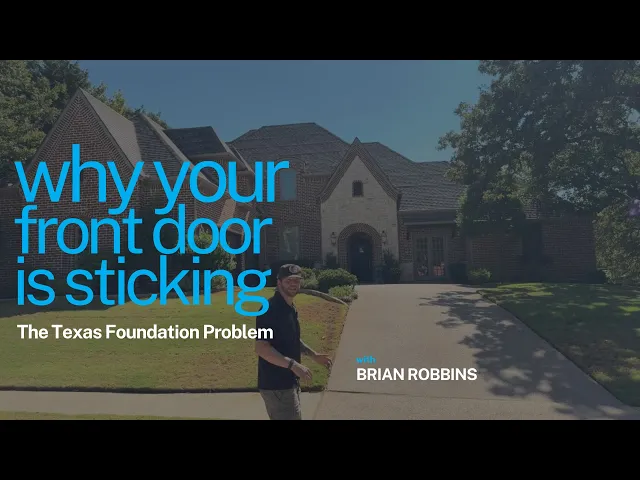
Sticking or rubbing. In North Texas and Houston, expansive clay soil swells after heavy rain and shrinks in dry summers, which can push a frame slightly out of square. Humidity also swells wood doors, especially in Houston summers and Tennessee's muggy months. The fix is usually an adjustment or a frame reset, not a new door. Our team explains this in why your front door is sticking.
Drafts. For a drafty door, the most common simple fix is a new door bottom (the sweep and seal along the bottom edge). A new threshold is only needed when the threshold itself is extensively damaged. Worn weatherstripping around the sides and top is the other usual suspect, and our weatherstripping service handles both.
Sagging or not latching. Stripped hinge screws are a classic cause. Longer screws that bite into the framing behind the jamb often solve it. See how to fix a sagging door.
A small area of rot. If rot is limited to the bottom of the jamb or brickmold, it can usually be cut out and rebuilt. Our door rot repair page explains when that works.
A quick test you can do tonight: close the door and look for light around the edges, then slide a sheet of paper into the gap at several points. If it pulls out with no resistance, the seal is not touching there. That is a repair, and a fairly simple one.
When is refinishing the right choice?
Refinishing is right when a wood door is structurally sound but the finish has failed. Think faded or orange-looking stain, clear coat peeling in sheets, gray wood showing through or a cloudy, chalky surface. If the door still swings well and the wood is firm, refinishing brings it back for far less than a new door.
Sun is the main reason finishes fail here. The USDA Forest Products Laboratory's Wood Handbook explains that ultraviolet light breaks down the surface of wood, which is why clear finishes on sun-exposed doors weather faster than paint. A west-facing door in Dallas, Austin or Houston takes the worst of it. Nashville doors deal with humidity and storm-driven rain on top of summer sun.
Refinishing is a good fit when:
The wood feels hard everywhere, including the bottom rail and the lower corners
The door opens, closes and locks normally
You love the door (or it is a high-quality wood door that would be expensive to replace)
You want a new stain color to go with fresh paint or brick
Refinishing will not fix drafts or sticking on its own, so if you have both problems, we handle the repair and the refinish together. Our full front door refinishing guide covers the process step by step.
What are the signs a front door needs to be replaced?
Replace when the door or frame can no longer be trusted to seal, lock or hold its shape. Clear signs include soft or crumbling wood in several places, a slab that has warped or bowed, cracks through panels, failed glass seals that keep fogging, frame rot that runs up the jamb, or a door that fails to secure your home even after adjustment.
Some signs are less obvious:
The fix keeps coming back. If a door has been adjusted, planed and resealed and still fights you every season, the slab may have moved for good.
You have a hollow or builder-grade door. Many homes from the 1980s through 2000s came with basic doors. They work, but they are rarely as solid, quiet or well-insulated as a modern door.
The opening is the real problem. If the frame is rotten from years of water getting in, putting a new slab in an old frame just moves the problem. In that case you want a complete prehung unit. Our guide to prehung vs slab doors explains the difference.
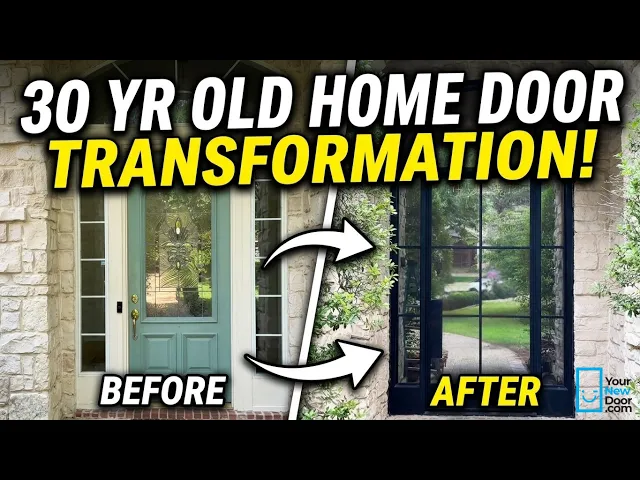
You want something different. Replacement is also a design decision: more glass, a wider double entry, a pivot door or a richer wood. That is where custom doors come in.
To check for hidden rot, press a screwdriver into the bottom of the jamb and the brickmold on both sides. If the tip sinks in easily, there is decay under the paint. Our team walks through the rest in how to tell if your door frame has hidden rot.
A simple decision checklist
Work through these five questions in order. The first "yes" usually points to the right service.
Is any wood soft, crumbling or cracked through? Small and local: repair. Widespread or in the door itself: replace.
Does the door stick, drag, sag or fail to latch? Repair. This is fit and hardware, and it is very fixable.
Do you feel drafts or see light? Repair, starting with the door bottom and weatherstripping.
Is the wood solid but the finish faded, peeling or gray? Refinish.
Is it a hollow, dented or dated door you have never liked? Replace, or go custom.
If you answered yes to both 2 and 4, you need a repair and a refinish, which we can do on the same project.
How much does each option cost?
Repairs are usually the least expensive, refinishing sits in the middle, and replacement costs the most because you are buying a new door system plus installation. National data from Angi, cited by NerdWallet, puts a typical exterior door at roughly $1,500, with doubles and French doors reaching up to about $6,000.
Your own number depends on size, material, glass, hardware and the condition of the frame. A few useful reference points:
Replacement value: The 2025 Cost vs Value Report puts a midrange steel entry door replacement at a national average of $2,435 and estimates it recoups 216% of its cost at resale, the second-highest return of the 28 projects studied.
Larger projects: The same report lists a fiberglass "grand entrance" (a new door with sidelights) at an average of $11,754.
Refinishing: Refinishing keeps your existing door, so you are paying for labor, prep and finish materials, not a new slab. [confirm with YND: typical refinishing price range]
Repair: Many repairs are a single visit. [confirm with YND: typical repair price range]
We give free estimates, often from photos you send, so you know your actual number before anyone starts work. For the full breakdown, read our front door replacement cost guide.
Does climate change the answer in Texas and Nashville?
Yes. Climate decides how fast finishes fail and how much doors move. In Texas, intense sun and expansive clay soil cause most problems. In Nashville and Middle Tennessee, humidity, heavy rain and freeze-thaw swings do more of the damage. Both push the decision toward good seals, UV-protective finishes and the right material.
Dallas-Fort Worth: Clay soil movement is a leading cause of sticking and gaps. Many "my door is ruined" calls turn out to need a frame reset. Read more about resetting doors for shifting clay soil.
Houston: Humidity swells wood and feeds rot at the bottom of frames, especially where water splashes back onto the threshold.
Austin: Strong sun on west and south elevations ages stained wood doors quickly, which makes refinishing a regular maintenance item. [confirm with YND: Austin service area]
Nashville: Wet springs and humid summers make sealing and frame condition the first things to check.
An overhang matters everywhere. A wood door with little or no porch cover will always need more care. See how much overhang an exterior door needs and our comparison of the best exterior door materials for Texas weather.
What happens during a Your New Door visit?
We start by finding the cause, not selling a door. We check the frame for soft spots, test how the hinges, latch and deadbolt meet the frame, look at the seals and examine the finish. Then we explain what we found and give you clear options, from the simplest fix to a full replacement if it is truly needed.
Send photos or book a visit. A full view of the door and a close-up of the problem is usually enough for a first opinion. You can book a virtual consultation.
Get clear options. You see what each option fixes and what it costs.
Our own crew does the work. Our installers and technicians are in-house, not subcontractors, and workmanship is covered by our 1-year warranty.
"If a hinge adjustment and new weatherstripping solve your problem, that is what we will recommend. A new door should be a choice, not a sales pitch." - Billy Cline
Frequently asked questions
Is it cheaper to repair or replace a front door?
Repairing is almost always cheaper when the door and frame are structurally sound. Adjustments, new hinges, a new door bottom or weatherstripping cost a fraction of a new door. Replacement makes more financial sense when rot, warping or security problems keep coming back after repairs.
Can a rotted front door frame be repaired without replacing the door?
Often, yes. If rot is limited to the bottom of the jamb or the brickmold, a technician can cut out the damaged section and rebuild it while keeping your door. If rot runs up the jamb or into the door itself, a full prehung replacement is the more reliable fix.
How long does a front door last?
It depends on material, exposure and maintenance. A well-installed fiberglass or steel door can last decades, and a quality wood door can last as long or longer if its finish is maintained. Doors in full sun with no overhang wear fastest, so regular refinishing matters most there.
Should I refinish or paint my wood front door?
Refinish with stain and clear coat if you want to show the wood grain, especially on mahogany or oak. Paint is better if the wood has stains or repairs you want to hide, or if you want a bold color. Paint generally holds up longer in direct sun than a clear finish.
Why does my front door stick in summer but not in winter?
Wood absorbs moisture and swells in humid months, then shrinks when the air dries out. In Texas, clay soil also expands after rain and shrinks in drought, which shifts the frame. A good adjustment and a properly sealed finish on all six sides of the door usually solves seasonal sticking.
How do I fix a drafty front door?
Start with the door bottom. A worn sweep or bottom seal is the most common cause of drafts and is a simple replacement. Next, check the weatherstripping on the sides and top. A new threshold is only needed when it is badly damaged, cracked or rotted.
Do you work in both Texas and Nashville?
Yes. Your New Door serves homeowners in Texas and in the Nashville area. Call (214) 997-1520 in Texas or (615) 348-5132 in Nashville, or start online at YourNewDoor.com.
Not sure which one your door needs?
Send us two photos: one of the whole door and one close-up of what is bothering you. A door expert will call you back and walk you through your options, with no pressure and no runaround.
Texas: (214) 997-1520
Nashville: (615) 348-5132
Online: YourNewDoor.com

Your home’s entryway should feel welcoming, not worn out. At YourNewDoor.com, we repair and replace doors so you get a secure, beautiful, and functional entrance that boosts your home’s value and comfort.
Door Replacements
Door Repairs
Copyright © 2026 YourNewDoor.com. All Rights Reserved.